


Your Privacy Choices
Founded by humans. Managed by pigeons.
-

Gigi
Secretary of Delightful Disorder
Gigi handles morale.She advocates bright color, alleyway poetry, overdone flourishes, and the right to be a little theatrical.
She believes seriousness is overrated.
She believes joy may be political.
She believes beauty is a public good.Where others see frivolity, Gigi sees rehearsal for a fuller life.
She argues gentler futures will need music, humor, flowers in unlikely places, and occasional spectacle.
She considers delight a form of resistance.
She insists joy is public infrastructure, and it has been crumbling for far too long.
-

Pip the Aggrieved
Minister of Bread & Collective Futures
Pip believes abundance is meant to circulate.
Every order, every print, every odd little object sold helps feed a longer dream: a life built with more freedom, more beauty, and eventually, more shared abundance.
Pip has concerns about a world organized around scarcity.
He proposes alternatives.
Small ones at first.
A studio.
A garden.
A tiny house or two.
A patch of land where people can breathe easier.Call it a commune if you like. Pip won’t object.
His philosophy is simple:
Bread for Pip is bread for all.
Success here is not imagined as accumulation, but distribution.
The hope is not merely to prosper, but to make prosperity more shareable. -

Mr. M
Director of Logistics & Minor Mysteries
Mr. M handles practical matters.
Shipping notices, supply lines, and improbable outcomes.
Where Pip dreams in manifestos, Mr. M worries whether the parcels have gone out.
He believes beauty should arrive well packed.
He advocates workmanship, patience, and the quiet dignity of things made carefully.
His vision of a gentler future includes reliable infrastructure, mutual aid with tracking numbers, and fewer things built to break.
He suspects order can be a form of care.
His department includes logistics.
And certain minor mysteries.


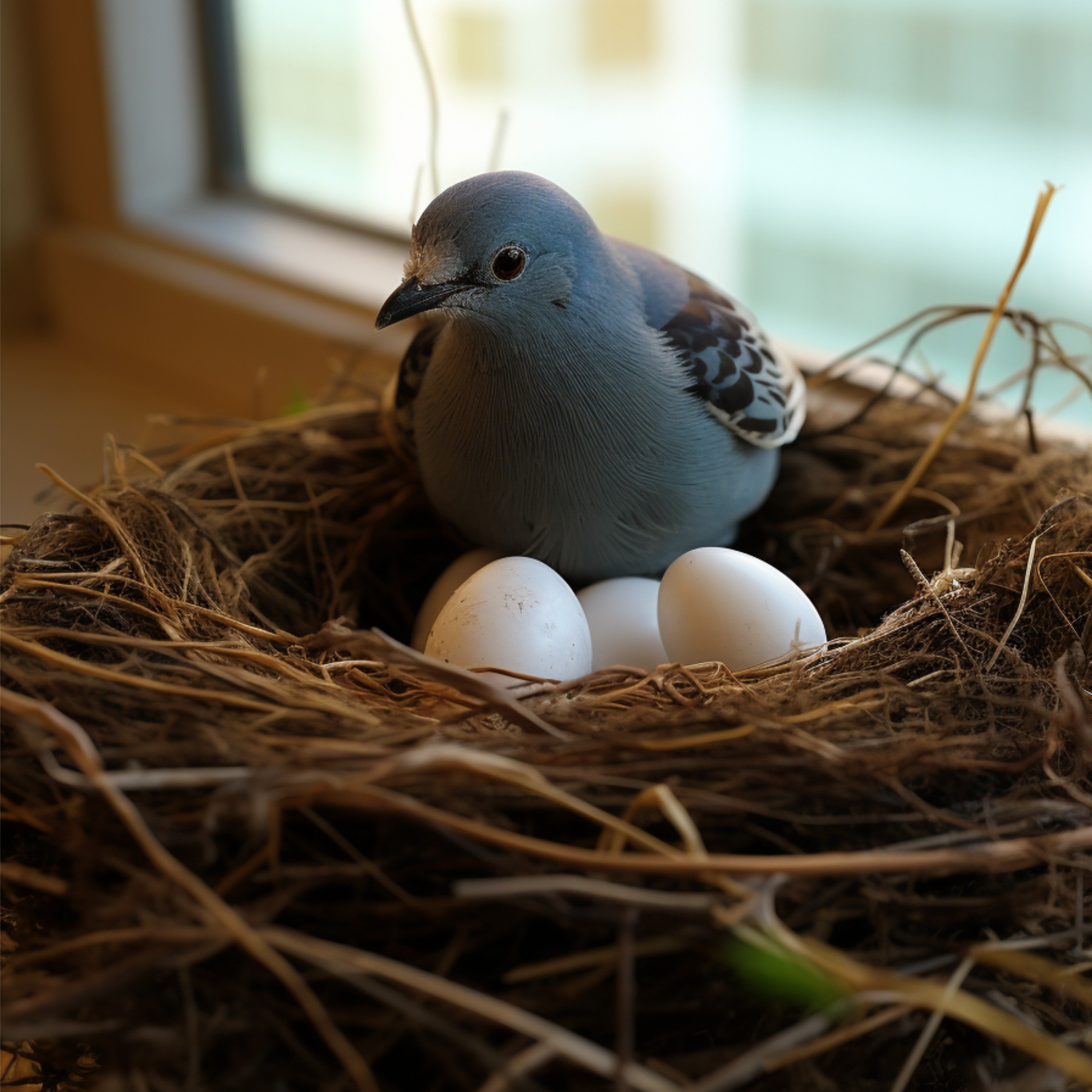
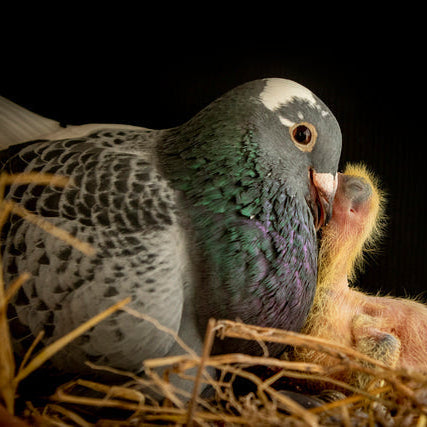
On the Common Pigeon
People call them street rats.
We disagree.
The city pigeon is not an invader but a companion species we made and then forgot.
Descended largely from the Rock Dove, pigeons were once messengers, navigators, war heroes, workers, and trusted partners to humans. We domesticated them for centuries, relied on them, bred them for homecoming, then abandoned many of them to fend for themselves in the architecture of our cities.
They are not failures of nature.
They are survivors of human neglect.
Even their awkward nests, so often mocked, tell a story.
Pigeons evolved in cliff ledges, not modern gutters. They are still trying to make homes in a world rearranged around them.
Honestly, aren’t many of us?
We like pigeons here because they are communal creatures.
They gather.
They share food.
They return.
They keep looking for belonging.
There is something admirable in that.
So yes, pigeons keep appearing around this studio.
As symbols.
As companions.
As a small defense of the overlooked.
And perhaps as a reminder:
what gets called ordinary is often extraordinary at closer range.
What We’re Building
Yes, this is a shop.
But also maybe an experiment.
Can a small independent studio make beautiful things, support a freer life, help other people along the way, and leave behind something gentler than the systems we inherited?
We’d like to find out.
If you buy something here, you’re not just supporting a storefront.
You’re feeding birds with long-range plans.
And maybe helping build a very small utopia, one odd object at a time.
Pip has concerns.
But also hope.
Maybe this becomes, in time,
a small coo-operative:
part studio, part commons, part experiment
in making abundance circulate.
Crumbs should circulate.
Welcome in.


'%3E%3Cpath fill='%235A31F4' d='M53.413.209H4.321A4.063 4.063 0 00.258 4.272v28.523a4.063 4.063 0 004.063 4.063h49.092a4.063 4.063 0 004.063-4.063V4.272A4.063 4.063 0 0053.413.209z'/%3E%3Cpath fill='%23fff' d='M32.678 14.872c0 2.663-1.867 4.564-4.476 4.564h-2.458a.206.206 0 00-.206.207v3.5a.207.207 0 01-.206.207h-1.72a.208.208 0 01-.191-.128.205.205 0 01-.016-.078v-12.63a.206.206 0 01.206-.207h4.602c2.598-.003 4.465 1.898 4.465 4.565zm-2.145 0c0-1.531-1.044-2.65-2.46-2.65h-2.329a.206.206 0 00-.206.207v4.874a.206.206 0 00.206.206h2.329c1.416.01 2.46-1.11 2.46-2.637zM33.188 20.927a2.453 2.453 0 011.026-2.104c.671-.505 1.72-.766 3.26-.82l1.64-.058v-.484c0-.97-.65-1.38-1.694-1.38s-1.706.37-1.858.975a.2.2 0 01-.198.144h-1.62a.203.203 0 01-.206-.235c.24-1.434 1.433-2.524 3.956-2.524 2.684 0 3.653 1.25 3.653 3.636v5.066a.209.209 0 01-.21.207h-1.633a.209.209 0 01-.146-.06.206.206 0 01-.06-.146v-.379a.155.155 0 00-.268-.109c-.49.533-1.281.918-2.548.918-1.864 0-3.094-.97-3.094-2.647zm5.926-1.098v-.393l-2.124.112c-1.119.057-1.77.522-1.77 1.305 0 .708.597 1.1 1.64 1.1 1.417 0 2.254-.765 2.254-2.124zM42.787 27.178V25.71a.21.21 0 01.25-.204c.25.047.505.071.76.072a1.961 1.961 0 001.975-1.4l.106-.338a.218.218 0 000-.14l-3.403-8.74a.21.21 0 01.194-.286h1.65a.21.21 0 01.194.135l2.311 6.164a.21.21 0 00.396 0l2.007-6.147a.21.21 0 01.2-.144h1.707a.212.212 0 01.197.287l-3.64 9.706c-.838 2.256-2.275 2.833-3.857 2.833-.3.008-.6-.028-.89-.107a.212.212 0 01-.157-.223zM12.352 9.579a8.475 8.475 0 00-5.844 2.28.37.37 0 00-.046.495l.981 1.34a.375.375 0 00.573.045 6.063 6.063 0 014.344-1.775c3.364 0 5.121 2.532 5.121 5.032 0 2.718-1.846 4.63-4.499 4.668-2.05 0-3.595-1.359-3.595-3.154a3.065 3.065 0 011.133-2.365.37.37 0 00.051-.516L9.54 14.327a.376.376 0 00-.536-.055 5.448 5.448 0 00-2.03 4.238c0 3.09 2.626 5.514 5.99 5.534h.045c3.994-.052 6.882-3.01 6.882-7.053 0-3.59-2.644-7.412-7.538-7.412z'/%3E%3C/g%3E%3Cdefs%3E%3CclipPath id='clip0'%3E%3Cpath fill='%23fff' d='M0 0h57.699v37H0z'/%3E%3C/clipPath%3E%3C/defs%3E%3C/svg%3E)
